As we move past the age of 35, many people in the USA begin noticing subtle—but concerning—changes in their oral health. Gums may bleed more easily, teeth can feel sensitive, and bad breath seems harder to control even with brushing and mouthwash.
If you’ve ever wondered why oral health declines after 35 and what you can actually do about it—this guide is for you.
This in-depth resource explains:
- Why gums, teeth, and breath problems increase with age
- The hidden lifestyle habits damaging your mouth
- Natural, science-backed prevention strategies
- How restoring healthy oral bacteria can change everything
This is not a quick fix article. It’s a complete oral health blueprint designed to help you protect your smile long-term.
Why Oral Health Declines After 35
Aging affects more than just skin and joints—it changes your mouth at a biological level.
After 35:
- Saliva production often decreases
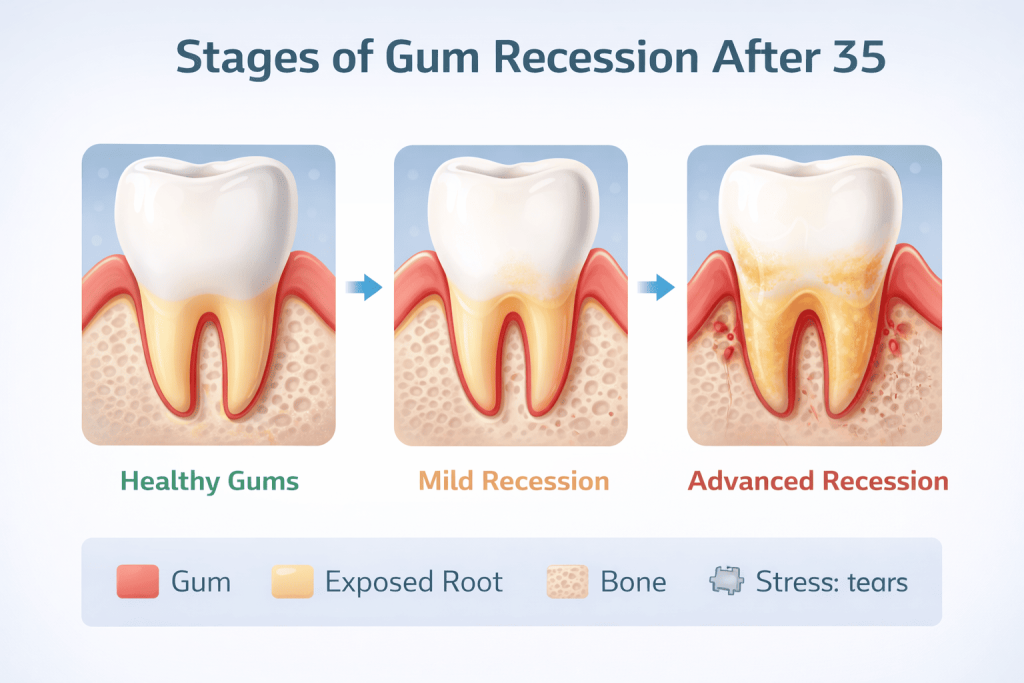
- Gum tissue becomes more fragile
- Harmful oral bacteria multiply faster
- Enamel slowly weakens
- Inflammation becomes harder to control
These changes explain why many adults suddenly experience gum problems, tooth sensitivity, or chronic bad breath—despite good hygiene.
👉 For early warning signs, see:
Early Signs of Gum Disease Most People Ignore
(/early-signs-of-gum-disease)
Common Oral Health Problems After 35
Gum Issues That Shouldn’t Be Ignored
Gum problems are often painless in the beginning, which is why they’re so dangerous.
Common symptoms include:
- Bleeding while brushing or flossing
- Swollen or tender gums
- Receding gum lines
- Persistent redness
Left untreated, these issues can lead to gum disease and even tooth loss.
👉 Learn causes and solutions here:
Bleeding Gums Causes and Home Remedies
(/bleeding-gums-causes-remedies)
👉 Prevention guide:
Morning Routine for Strong Gums
(/morning-routine-strong-gums)
Bad Breath That Doesn’t Go Away
Chronic bad breath (halitosis) isn’t just embarrassing—it’s often a sign of bacterial imbalance.
Most mouthwashes only mask odor temporarily and can worsen the problem over time by killing beneficial bacteria.
👉 Read more:
Why Mouthwash Doesn’t Fix Bad Breath
(/why-mouthwash-doesnt-fix-bad-breath)
👉 Deep dive:
Chronic Bad Breath Causes From the Gut
(/chronic-bad-breath-gut-causes)
Teeth & Enamel Weakening
As enamel thins with age, teeth become more vulnerable to:
- Sensitivity
- Acid erosion
- Cavities
- Mineral loss
👉 Related reading:
How to Strengthen Tooth Enamel Naturally
(/strengthen-tooth-enamel-naturally)
👉 Support guide:
Minerals Needed for Strong Teeth
(/minerals-for-strong-teeth)
Lifestyle Habits That Damage Oral Health
Many everyday habits quietly destroy oral balance.
1. Overusing Antibacterial Mouthwash
Kills good bacteria along with bad.
2. High-Sugar & Acidic Diets
Feeds harmful microbes and erodes enamel.
👉 Explanation:
Acid Damage to Teeth Explained
(/acid-damage-to-teeth)
3. Stress & Poor Sleep
Weakens immune response in gums.
4. Antibiotic Overuse
Disrupts oral microbiome for months.
👉 Learn more:
How Antibiotics Damage Oral Bacteria
(/antibiotics-damage-oral-bacteria)
The Oral Microbiome: The Missing Link in Oral Health
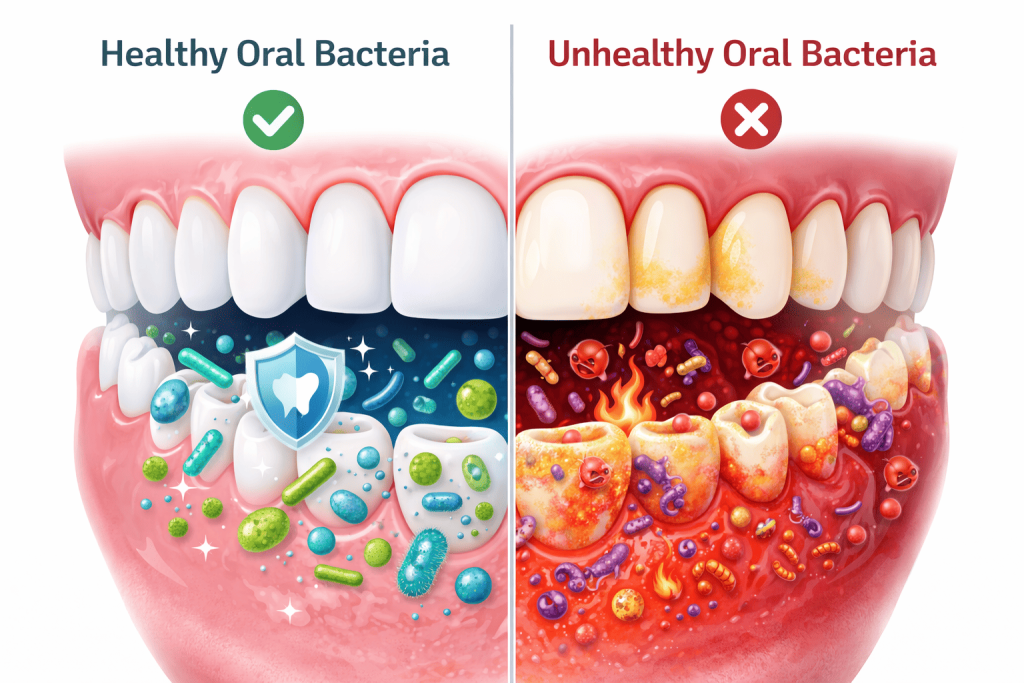
Your mouth contains billions of bacteria—some protect you, others harm you.
When this balance is disturbed, problems appear fast.
👉 Start here:
What Is Oral Microbiome and Why It Matters
(/oral-microbiome-explained)
Good vs Bad Bacteria
Good bacteria:
- Protect enamel
- Reduce inflammation
- Prevent odor-causing compounds
Bad bacteria:
- Cause gum disease
- Produce sulfur odors
- Weaken enamel
👉 Full breakdown:
Good vs Bad Bacteria in the Mouth
(/good-vs-bad-oral-bacteria)
Natural Ways to Restore Oral Health After 35
Nutrition for Gums & Teeth
Key nutrients include:
- Vitamin D
- Vitamin C
- Calcium
- Magnesium
👉 Guide:
Best Vitamins for Healthy Gums
(/best-vitamins-for-healthy-gums)
Probiotic Foods for Oral Balance
Certain fermented foods support beneficial bacteria.
👉 Learn which ones help most:
Best Probiotic Foods for Gum Health
(/probiotic-foods-for-gums)
Daily & Night Routines That Work
Consistency matters more than intensity.
👉 Night care:
Night Routine for Stronger Teeth
(/night-routine-strong-teeth)
Can Probiotics Improve Oral Health?
Research increasingly shows that oral probiotics may help:
- Reduce harmful bacteria
- Improve gum health
- Freshen breath naturally
- Support enamel protection
👉 Deep dive:
Can Probiotics Protect Teeth?
(/can-probiotics-protect-teeth)
👉 Comparison:
Oral Probiotics vs Regular Probiotics
(/oral-vs-regular-probiotics)
Best Probiotics for Oral Health (What to Look For)
Not all probiotics work in the mouth.
An effective oral probiotic should:
- Target oral-specific strains
- Support gum tissue
- Reduce odor-causing bacteria
- Be easy to use daily
Many people exploring this approach choose targeted oral probiotic supplements designed specifically for mouth health.
👉 Learn more here (educational resource):
https://getprodentims.com/
(FTC note: This link may earn a commission at no extra cost to you.)
Final Thoughts: Protect Your Smile After 35
Oral health problems don’t appear overnight—but they can be reversed or managed when addressed early and correctly.
By understanding:
- Why oral health declines with age
- How bacteria influence gums, teeth, and breath
- Which natural strategies actually work
You’re no longer guessing—you’re making informed decisions.
Your mouth is the gateway to your overall health. Protecting it today can save you pain, expense, and regret tomorrow.
Leave a Reply